Apple Chose Google
The biggest AI deal of the year just quietly reshaped every phone in your pocket

Hey there!
This week had a lot happening. Apple made a $1B bet on Google’s AI. Anthropic picked a fight with the Pentagon and somehow grew faster because of it. Google shipped a free Figma competitor that generates five screens at once. And Perplexity put a full AI browser on your iPhone for free.
Let’s break down what matters.
TL;DR
Apple picked Google Gemini to rebuild Siri. Deal is worth ~$1B.
Google Stitch upgraded: infinite canvas, voice design, 5 screens at once. Still free.
Anthropic launched a $100M partner network, fought the Pentagon, grew faster anyway.
OpenAI raised $110B at $730B valuation. GPT-5.4 is live with 1.05M context.
Perplexity Comet browser is now free on iPhone. Health connectors launched too.
The Big Moves 🚀
Apple Chose Google to Rebuild Siri ($1B Deal)
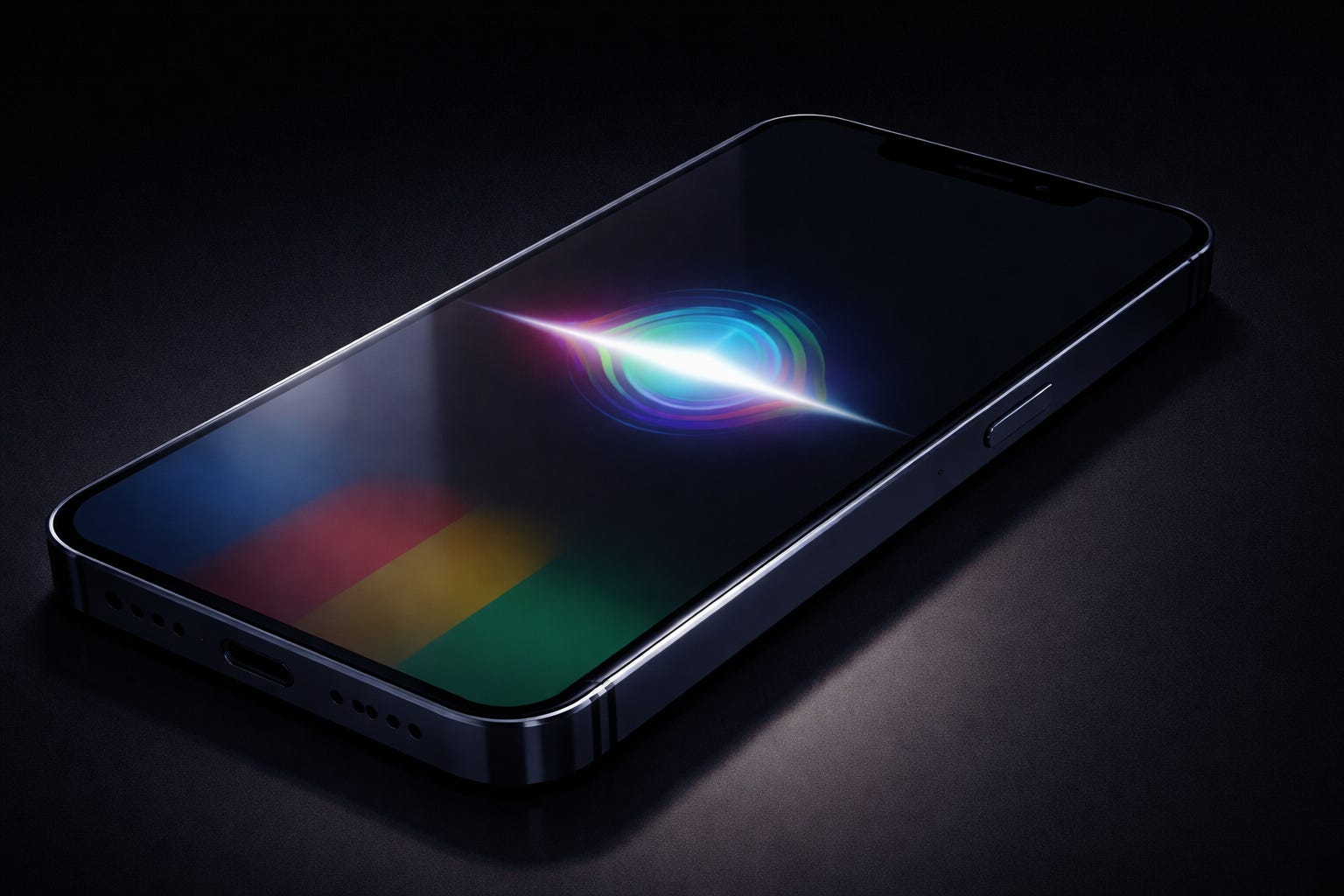
Apple, the company that builds everything in-house, just licensed Google’s Gemini to power the next version of Siri. The new Siri lands in iOS 26.4 this spring. It will read your calendar, emails, and messages. From the user’s side, it still looks like Siri. Underneath, it is Gemini.
Why it matters:
Apple went to Anthropic first. Talks broke down over price. OpenAI was complicated by the Jony Ive hardware situation. Google was left standing. This is Apple admitting that building a frontier model in-house is not worth it. The model layer is now infrastructure.
Context-aware Siri from Mail, Messages, Calendar
White-labeled: no Google branding visible to users
Privacy buffer: only complex queries reach Google servers
Requires iPhone 15 Pro, iPhone 16, or iPhone 17
Google Stitch Just Got Dangerous for Designers
Google Stitch shipped a major update on March 18. It is an AI-native design tool that generates full UI from a text prompt. And as of this week, it got significantly more powerful.
Why it matters:
Stitch now generates up to 5 screens at once on an infinite canvas. You can talk to it with Voice Canvas and it will interview you about your design goals, offer critiques, and make edits live. It exports React code directly. It is powered by Gemini 3. And it is completely free.
Infinite canvas: see all screens side by side
Voice Canvas: speak your design direction, AI edits live
DESIGN.md: export your design system as a markdown file for other tools
React export: go from prompt to production frontend
Free: 350 standard generations per month, no card required
Try it at stitch.withgoogle.com
Anthropic Launched a $100M Partner Network and Fought the Pentagon
Anthropic announced the Claude Partner Network on March 12, committing $100M to help enterprises adopt Claude. The same week, the Pentagon designated Anthropic a supply chain risk. Agencies started phasing out Claude. Anthropic filed lawsuits.
Why it matters:
The Pentagon news coincided with a surge in Claude installations and ChatGPT removals. OpenAI’s decision to work with the Pentagon actually hurt them. Anthropic’s subscription share grew 4.9% month over month in February while OpenAI’s dropped 1.5%. The fight made them look principled, and the market rewarded it.
Claude Sonnet 4.6 launched: better coding, 1M token context in beta
Claude Code Channels: message Claude Code directly via Telegram or Discord
Inline visualizations: charts and diagrams generated inside responses
Self-serve Enterprise plans: no sales call required anymore
Double usage limits running March 13 to March 27 for all plans
OpenAI Raises $110B at $730B Valuation. GPT-5.4 Is Live.
$50B from Amazon, $30B from Nvidia, $30B from SoftBank. Post-money valuation: $840B. Largest venture raise ever. Burn rate this year: $14B in losses.
Why it matters:
OpenAI is not winning on model quality alone. It is winning on consumer trust and distribution. 900 million weekly active users, 50 million paying subscribers. GPT-5.4 Thinking scored 83% on GDPVal, the benchmark for economically valuable tasks. That is human-expert level on real work.
GPT-5.4: Standard, Thinking, and Pro tiers
1.05M token context window, largest OpenAI has offered commercially
Tool Search: model fetches only the tools it needs per query, cutting cost and latency
Interactive visual explanations: manipulate math and science concepts in real time
Perplexity Comet Is Now Free on iPhone
Perplexity’s AI browser Comet launched on the iPhone App Store this week, free, no subscription required. It replaces your browser experience entirely. Chat across tabs, research on the fly, fill forms, book appointments. The desktop version started at $200/month. iPhone gets it for free.
Why it matters:
Perplexity is not building a search engine. They are building the interface layer on top of all AI models. This week they also launched Perplexity Health with Apple Health, Fitbit, and 1.7 million care providers. Model Council now runs multiple frontier models in parallel and synthesizes disagreements. This is a very different product vision than anyone else in the market.
Comet browser: free on iPhone, chats across tabs, fills forms autonomously
Perplexity Health: Apple Health, EHR from 1.7M providers, Fitbit, Withings
Model Council: runs GPT-5.4, Claude, Gemini in parallel, synthesizes answers
Deep Research upgraded to Claude Opus 4.6 for Max users
Custom Skills: automate repetitive prompts into one-click workflows
Memory improved: recalls correctly 95% of the time, up from 77%
What This Means for Builders
The model layer is becoming commodity infrastructure. Apple proved it. Block proved it. Every lab this week shipped products built on top of other labs’ models.
The race now is about surface, trust, and distribution. Who owns the place where people ask questions? Perplexity is betting it is the browser. Apple is betting it is the phone’s assistant. OpenAI is betting it is the chat interface people already have on their home screen.
Design for outcomes, not conversations. Users do not want a smarter chatbot. They want something that completes the task.
3 Weekend Projects ⚒️
Design with Google Stitch
Go to stitch.withgoogle.com, describe your next app idea in two sentences, and generate 5 screens at once. Export the React code and drop it into Replit or Lovable. This is the fastest way to go from idea to clickable prototype right now. Completely free.
Personal Context Assistant
Build a lightweight version of what Apple just announced using the Gmail API, Google Calendar API, and GPT-5.4. Give it 30 minutes of your context and ask it what you should know before your next meeting. One afternoon build. Very useful immediately.
Model Picker
GPT-5.4 tiers, Gemini Flash-Lite, Claude Sonnet 4.6, Qwen 3.5 at $0.10 per 1M tokens. Build a simple form where you describe your use case and it recommends the right model with cost estimates. Pull from public pricing pages. Weekend project, genuinely useful product.
The Toolbox
Google Stitch — Free Figma competitor that exports React. Try it now. (Design / No-code)
Perplexity Comet — AI browser on iPhone, free, no subscription needed. (Browser / Research)
GPT-5.4 — 1.05M context, Tool Search, three tiers. Best for agentic work. (LLM / API)
Claude Sonnet 4.6 — 1M token context in beta, inline charts, Telegram integration. (LLM / Code)
LTX 2.3 — 4K video with synced audio in one pass, open weights, free to run. (Video Gen)
Qwen 3.5 9B — $0.10 per 1M tokens. Matches models 13x its size. (Open Source)
Final Thought
The AI race in March 2026 is not about who has the smartest model anymore.
It is about who owns the surface where people ask questions.
Anthropic is betting on enterprise trust.
Google is betting on workspace and device integration.
OpenAI is betting on consumer habit and raw capability.
Perplexity is betting on owning the browser itself.
All four are building on each other’s infrastructure to do it.
The question is: what are you building on top of?
Apple chose Google over OpenAI and Anthropic. Does that surprise you or does it make perfect sense? Comment and let us know.